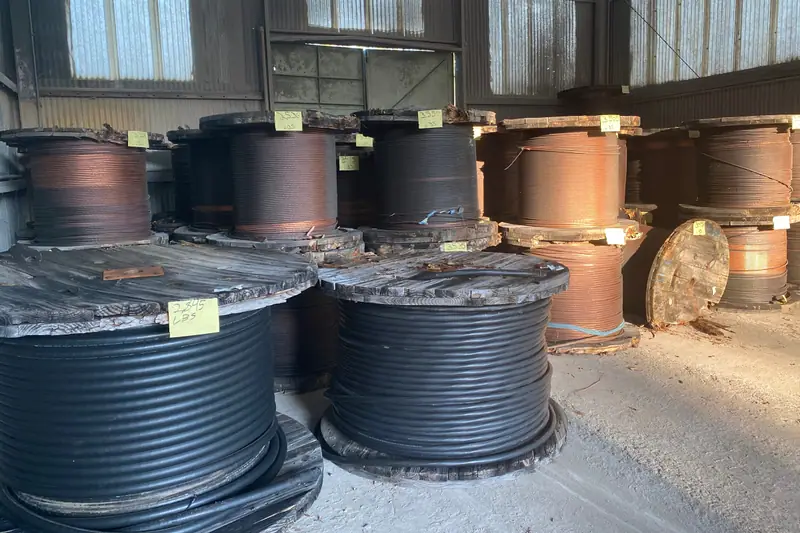
Start Your Photos for Wire Quote Requests with a Lot Overview
Start with a wide photo showing everything you want to sell. Include full and partial reels, boxed coils, cut lengths and loose cable groups. Keep unrelated material outside the frame, or identify what is excluded in your message.
Assign each reel or group a simple identifier, such as Reel A or Coil B, and use it in your photo filenames and inventory list. If you are figuring out how to sell wire online, this connection between pictures and quantities makes the material easier to review. Our wire offer process explains what happens after you send the details.
- Take additional overview photos from another angle if reels hide material behind them.
- State the total reel, box or coil count, including anything not visible in the overview.
Photograph the Reel Tag Straight On
Fill the frame with the manufacturer’s tag without cropping its edges. Capture the manufacturer, catalog or product number, conductor size, conductor count, voltage rating and listed footage wherever those fields appear. Tap the tag on your phone screen to focus, then check that the smallest text is readable.
A tag may show the original shipped length rather than what remains on a partial reel. Photograph handwritten balance notes separately and explain whether they are measured figures or estimates. Use our guide to reading a wire reel tag if the abbreviations are unfamiliar.
- If the tag is faded, take one straight-on photo and another with light coming from the side.
- Photograph damaged or missing labels honestly; do not replace uncertain details with guesses.
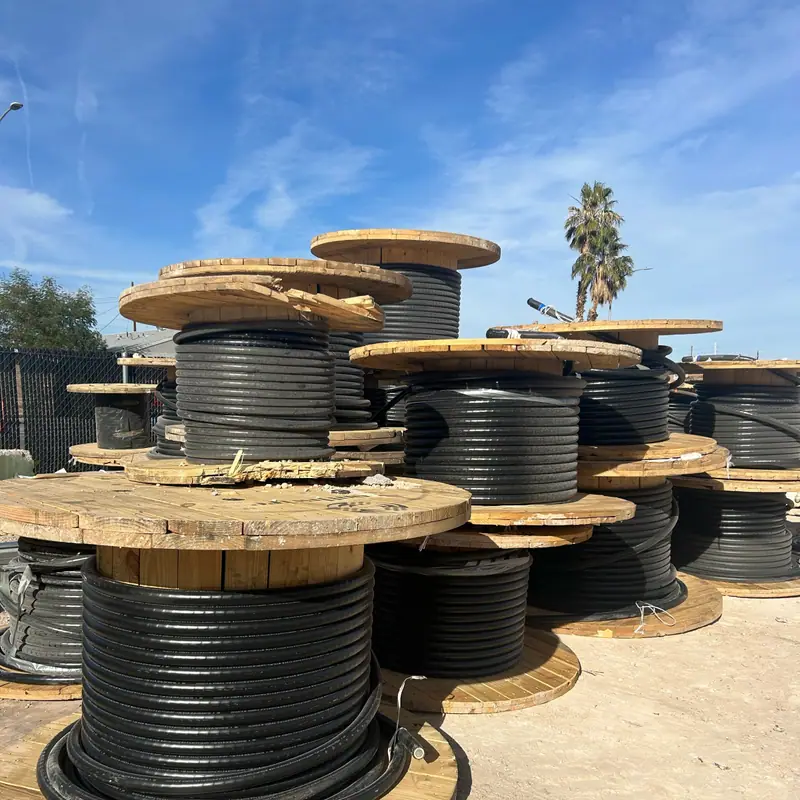
Capture Jacket Printing and an Existing Cut End
Photograph a readable stretch of jacket printing, sometimes called the print legend. Include enough length to show the wire type, size and ratings rather than one isolated word. For example, a THHN/THWN-2 marking or a tray cable conductor count can help distinguish material that looks similar from a distance.
Next, photograph an existing accessible cut end straight on and from a slight angle. Show the conductors, insulation, jacket and any visible shielding or armor. Do not cut usable cable just to make a photo, strip insulation or handle energized material; photograph only cable that is safely disconnected and accessible.
For used battery or power cables, include the lugs and their condition. Our wire and cable buying guide covers the product categories you may be identifying.
Have reel tags or a footage list? Send photos and we will review the lot.
Get an offerShow the Whole Reel, Flanges and Cable Condition
Stand back far enough to include the entire reel and both flange edges where possible. Add a side view showing the cable wound around the barrel. These photos help show the amount remaining, the reel’s condition and whether loose wraps or damaged flanges need attention before movement.
Include close-ups of jacket cuts, crushed sections, exposed ends, weathering or other visible damage. For boxed coils, photograph the box label and visible contents without unnecessarily opening sealed packaging. For cut lengths, show how they are grouped and provide a separate length for each piece when known.
- Do not describe a reel as full based only on its appearance.
- Keep measured lengths separate from estimates; our partial-reel measuring guide explains useful ways to document remaining footage.
Use Your Phone in Texas Sun and Dark Warehouses
Bright Texas sunlight can wash out white tags and create glare on shiny jackets. Move yourself to change the angle, or shade the label without moving a heavy reel. Keep your phone’s shadow off the text and avoid shooting directly toward the sun.
In a dark warehouse, use available overhead lighting or a steady portable light positioned to the side. Flash can reflect off plastic tag covers, so compare a flash photo with one taken without it. Hold the phone steady, use the normal camera rather than heavy digital zoom, and review each image before leaving.
Wipe the camera lens first. Send original images when possible instead of screenshots, which can make small print harder to read. Do not climb stacks, roll unsecured reels or enter unsafe storage areas to get a better angle.
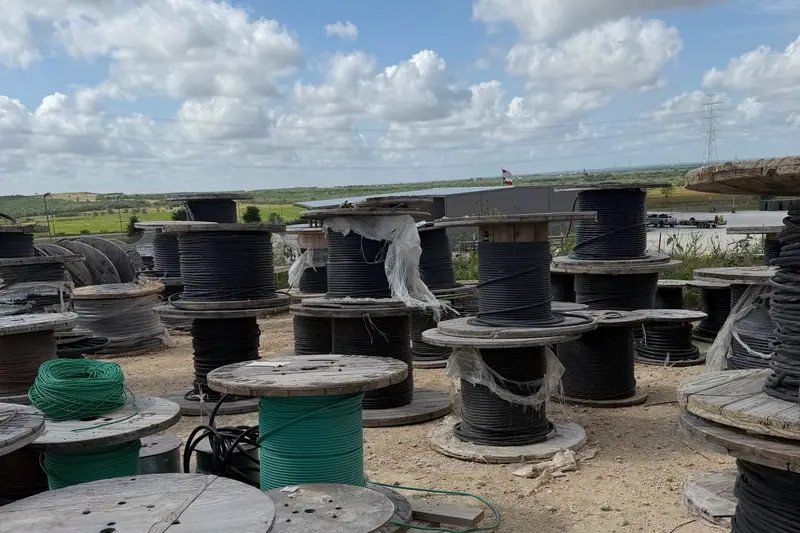
Pair Your Wire Photos with a Short Inventory
Photos for wire quote requests are most useful when accompanied by a short list. Match each item to its photo identifier and record the wire type, size, conductor material, quantity and condition. Say plainly when a detail is unknown or when footage comes from a tag rather than a current measurement.
Tell us the pickup city, whether the material is indoors or outdoors, and any access restrictions. Mention whether reels are on pallets, whether loading equipment is available and whether an appointment is needed to enter the site. These details describe the pickup needs without requiring you to move material for photographs.
- Identify new, unused material separately from used or decommissioned cable.
- Note whether cut lengths have lugs, connectors or other terminations.
- For project leftovers, keep your list tied to the material being released; see our project closeout wire guide.
Send the Photo Set and Confirm Written Terms
Send your pictures and list through the wire offer form, email industrial832@gmail.com, or call 951-403-5738 to discuss your lot. We review the material and make a written offer before pickup. Payment method and timing are confirmed in writing before pickup.
We verify the seller and proof of ownership, such as an invoice, purchase order, closeout paperwork or company letter, and keep a written purchase record. Our Texas seller paperwork guide explains what to prepare.
We arrange pickup anywhere in Texas, or you can call first to schedule a drop-off at our Houston location. At pickup or receipt, we check the count against the written terms. If the wire is not reusable, we say so honestly; it may belong with a scrap recycler instead.