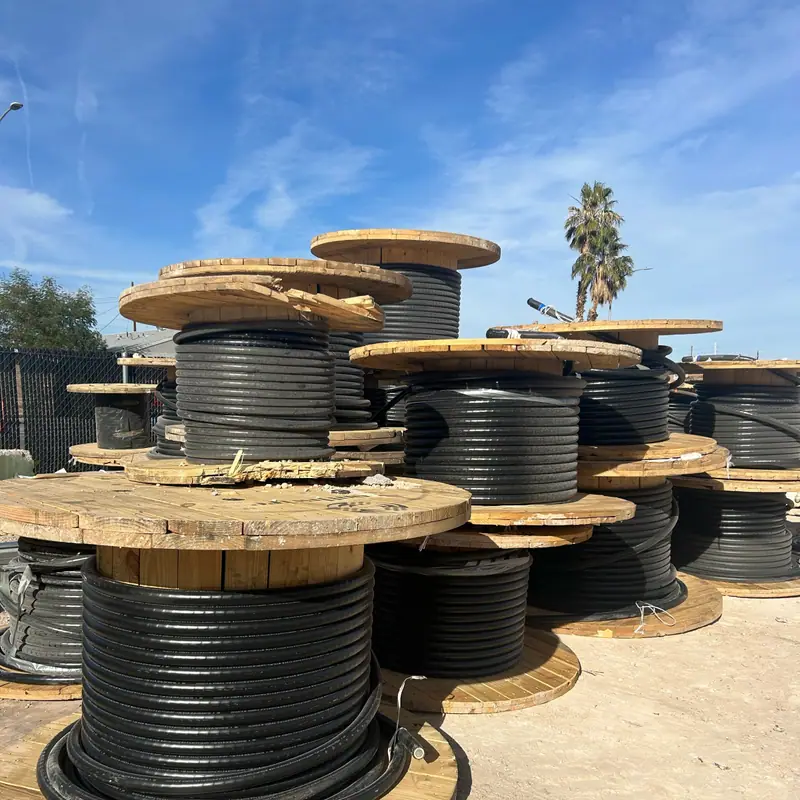
How to store wire reels outside without losing usable stock
Start with the cable manufacturer's storage instructions, not just its installation rating. A wet-location or sunlight-resistant marking does not mean a reel can sit indefinitely in standing water with open ends. Wooden flanges, packaging and identification labels also need protection.
For cable reel storage, a roofed, open-sided shed is preferable to an exposed yard. Choose firm ground that drains away from the reels, with enough room to inspect both flanges and move material safely. Move boxed coils and products not intended for outdoor exposure into dry indoor storage.
- Separate stock by cable type, size and condition so weather-damaged material does not get mixed into an otherwise usable lot.
- Keep readable inventory records for full reels, partial reels and loose lengths; our guide to reading a wire reel tag explains which details to preserve.
Dunnage and chocks keep Texas yard storage off the ground
Store reels upright, resting on their flange edges rather than lying flat on one flange, unless the manufacturer directs otherwise. Use sound, load-rated dunnage or a suitable reel rack to keep them above wet soil and routine runoff. Support both flanges evenly and chock against rolling in either direction.
Do not assume a shipping pallet can carry a heavy power-cable reel. Check the support capacity, ground stability and reel condition before placing or moving it. Avoid stacking reels unless a purpose-designed system and the manufacturer's instructions allow it.
- Keep handling lanes clear and avoid positions where a rolling reel could reach people, equipment or traffic.
- Use the reel's documented weight for handling plans; wire reel sizes and weights explains what information to collect before pickup.
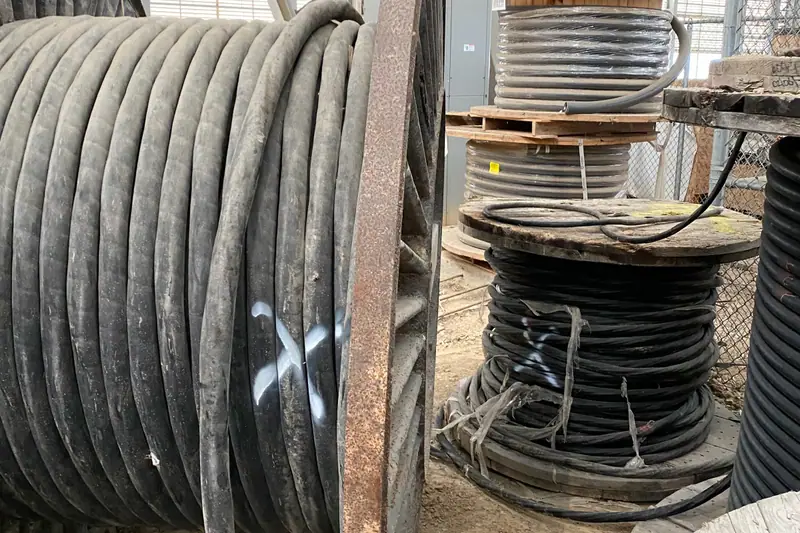
Texas heat, UV and humidity need different controls
Direct sun can heat exposed cable and deteriorate unsuitable jackets, wrapping and labels. Check the jacket legend and product documentation for sunlight resistance and storage-temperature limits. Shade reduces exposure, but it does not make indoor-only cable suitable for an outdoor yard.
Use a secured, weather-resistant cover that sheds rain without resting tightly against the cable or trapping humid air. Leave ventilation around the lower edges while protecting against wind-driven rain. Clear plastic wrapped tightly around a wet reel can retain condensation rather than dry it.
Inspect for brittle wrapping, jacket cracking, discoloration and moisture under covers. For products such as THHN / THWN-2 wire, preserve the complete marking so the actual ratings remain identifiable rather than assuming them from appearance.
Have reel tags or a footage list? Send photos and we will review the lot.
Get an offerEnd caps protect cut power cable from moisture entry
An intact jacket does not protect an open cable end. Moisture can enter between strands or cable components and travel beyond the visibly wet area. Protect both ends, including the inside end near the drum, using end seals specified for the cable and exposure.
Do not rely on a loose plastic bag or a few turns of ordinary tape as a long-term weather seal. Follow the seal manufacturer's preparation instructions, and inspect seals after handling or severe weather. For medium-voltage cable, follow the cable manufacturer's specific sealing and storage requirements.
If an end has been exposed to rain, disclose that history instead of capping it and describing the reel as dry. Do not cut back cable merely to hide staining; preserve the information needed to assess its condition.
Prepare reel storage for hurricanes, flooding and hail
Along the Gulf Coast, prepare before a storm watch becomes a last-minute moving job. Relocate vulnerable inventory into suitable covered storage when it is safe to do so. Secure loose covers and packaging, check chocks, and keep access routes clear without blocking drainage.
Dunnage helps with routine runoff, not a flood. If rising water is possible, use a safer storage location rather than assuming another layer of blocking will be enough. Never enter floodwater or attempt to restrain a moving reel during a storm.
After hail or high winds, inspect covers, flanges, exposed cable and end seals before handling. Isolate flooded reels and record the water exposure, including any known saltwater or chemical contamination. Dry-looking cable is not proof of fitness; any required assessment or testing should follow manufacturer guidance.
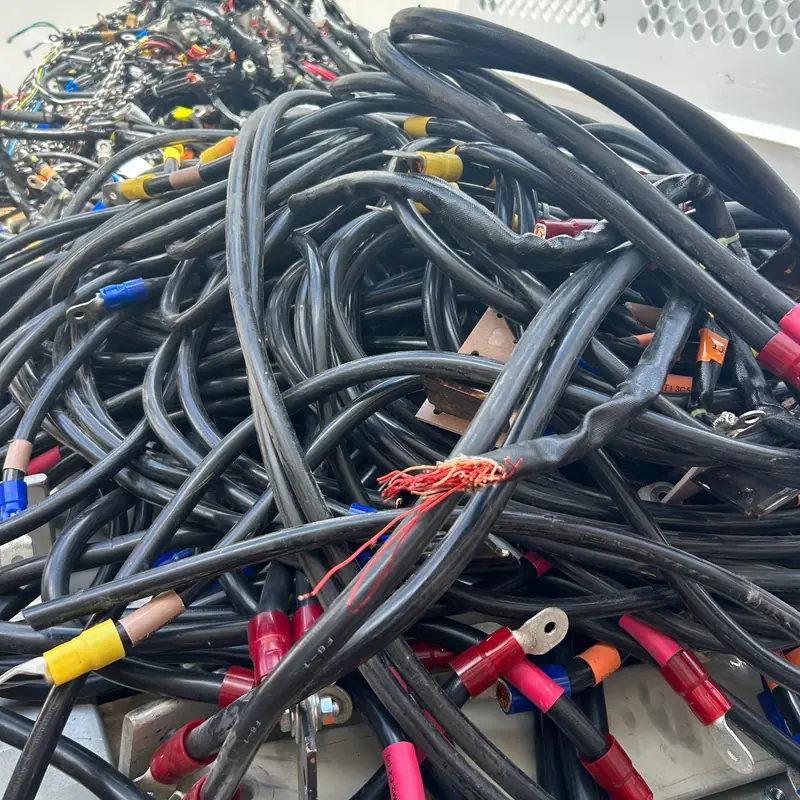
Rotate surplus inventory and preserve condition records
Inventory rotation means using or offering older suitable stock first, not periodically rolling heavy reels around the yard. Date each lot, keep its storage history and inspect it after storms or moves. Only turn or re-reel cable when the manufacturer requires it or a planned handling operation calls for it.
Photograph the tag and jacket legend before labels fade. Keep footage records separate from the reel, and distinguish measured footage from estimates. Our guide to measuring wire left on a reel can help you describe partial reels without unnecessary unwinding.
Storage condition affects how confidently a buyer can identify and evaluate the material. Readable markings, protected ends and sound reels support resale assessment; cracking, contamination and uncertain exposure can limit reuse. See what affects surplus cable value before deciding to hold inventory through another season.
Offer stored wire reels before weather reduces their options
Texas Wire Buyers buys reusable surplus wire and cable for resale and reuse, not as scrap. Send photos of the whole lot, reel tags, jacket markings and accessible cut ends, plus a list or footage estimate. Include storage conditions and any damage; our wire photography guide helps you document the lot without dismantling it.
We verify the seller and proof of ownership, such as an invoice, purchase order, closeout paperwork or company letter, and keep a written purchase record. Our Texas seller paperwork guide explains what to prepare.
Call 951-403-5738, email industrial832@gmail.com or request an offer online. We review the material and make a written offer before pickup, with payment method and timing confirmed in writing. We arrange pickup anywhere in Texas or receive Houston drop-offs by appointment; call first, and we check the count against the written terms when receiving the lot.