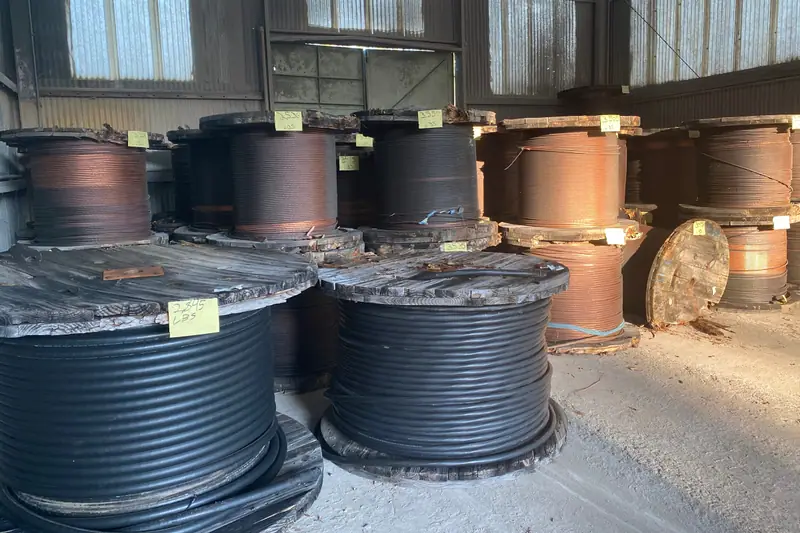
Sell Wire Reels for the Wire, Not the Empty Spool
We buy electrical wire and cable as reusable product: unused full reels, partial reels, cancelled-order material, distributor overstock and project leftovers. We also review used cable that remains in reusable condition, including re-reeled cable. The material on the reel is what matters, not the wooden drum itself.
If you want to sell spools of wire, start by showing what is wound on each spool and how much remains. Our review considers the conductor, insulation, markings, usable length and condition. Reusable wire is usually worth more sold as product than sold as scrap by weight because the buyer is paying for usable wire, not just metal.
We do not buy empty wooden spools or empty cable drums. For empties, ask the original supplier or manufacturer about a reel-return program, or contact a reel recycler about its acceptance requirements. Keep any return labels or ownership markings visible.
Full Reels, Partial Reels and Re-Reeled Cable
An intact full reel with a readable tag makes identification easier, but a broken factory seal does not automatically rule out a sale. Partial reels can still contain useful lengths. Tell us if the footage is confirmed, estimated or simply copied from an original tag that no longer reflects the remaining amount.
For example, a reel may hold THHN/THWN-2 building wire, XHHW-2 aluminum conductor, tray cable or power cable. Send the actual jacket legend rather than guessing from appearance. Our wire and cable buying guide explains the material categories to identify.
For re-reeled material, tell us what the cable came from, whether there are splices and whether each reel contains one continuous length. Our partial reels and cut lengths guide covers details that help separate usable lengths from a mixed collection of short pieces.
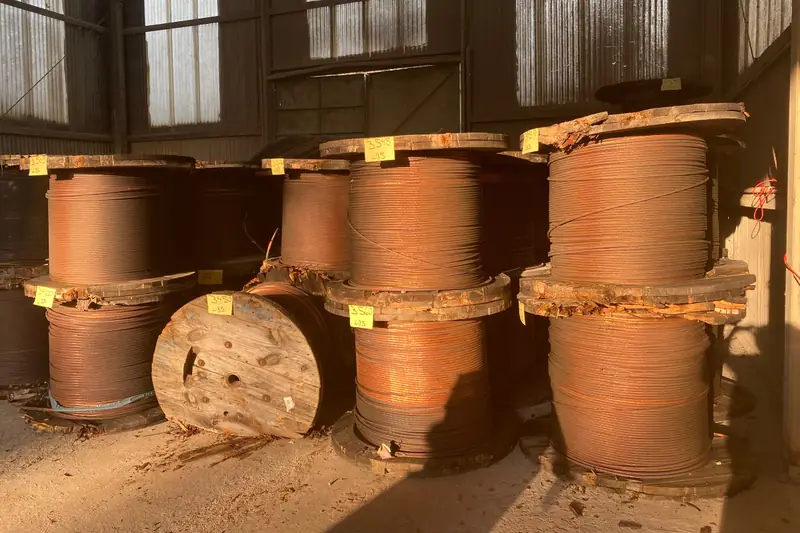
Reel Tags and Photos That Support a Written Offer
Start with one wide photo of the whole lot, then photograph each reel separately. Make the tag and jacket print readable, and include cut ends so we can see the conductor construction. If several reels look alike, label your photos to match the reel numbers on your inventory.
A tag may show the original footage, conductor size, voltage rating and a weight. Record those details without assuming the tag still describes everything on a partially used reel. Our guide to reading a wire reel tag helps you locate the useful fields.
- List copper or aluminum, AWG or kcmil size, conductor count, insulation type and voltage rating when known.
- State remaining footage for each reel and identify estimates separately from measured lengths.
- Show damaged flanges, exposed cable, crushed sections, jacket damage or weathered packaging.
- Use the wire photography guide to prepare close-ups and whole-lot photos.
Have reel tags or a footage list? Send photos and we will review the lot.
Get an offerReel Sizes, Weights and Pickup Access
Small spools and large cable drums need different handling plans. Send the flange diameter, overall reel width and any labeled weight, along with photos of the reel condition. A cable weight on a tag may not be the total handling weight of the cable and reel together, so identify exactly what the label says.
Our wire reel sizes and weights guide explains the measurements to gather. Do not guess a heavy reel's weight from its diameter alone: conductor material, cable size, drum construction and remaining footage all affect it.
Tell us where the reels are stored, how a pickup vehicle can reach them and what loading equipment is available at the site. Mention stairs, narrow gates, soft ground or damaged flanges before pickup arrangements are made. Do not move or unwind a heavy reel just to get a better photo.
What Makes Wire on a Reel Reusable?
Readable identification, sound insulation and useful continuous lengths help establish whether cable can be resold for reuse. A full-looking reel is not enough by itself. Tell us about storage conditions, exposed ends, moisture, contamination, heat damage or any known installation history.
Used cable needs a clear description of its condition and previous use. Decommissioned power or battery cables with lugs, for example, may still be reusable, but the ends, markings and jacket condition need review. See our used electrical wire selling guide for the information to gather.
If wire is not reusable, we say so honestly; it may belong with a scrap recycler instead. Do not strip or burn insulation to prepare material for our review. We are evaluating the wire as a usable product, not simply the metal content.
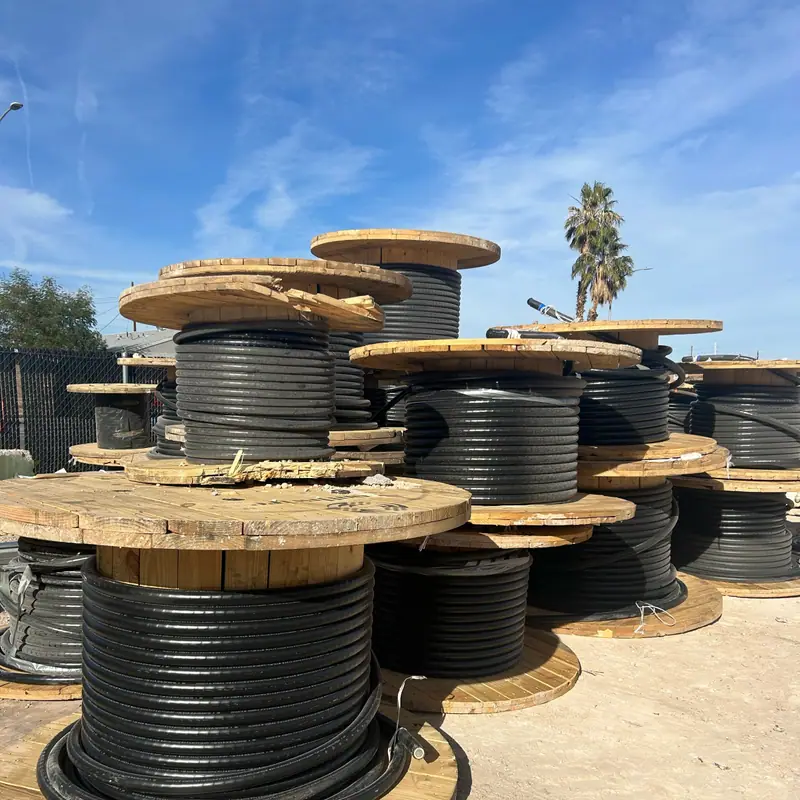
Texas Pickup and Houston Reel Drop-Off
We arrange pickup anywhere in Texas. Before scheduling, send your location, reel count, estimated footage and handling details so the lot and collection arrangements can be reviewed together. Keep the offered material identifiable and separate from items you are retaining.
You can also drop off by appointment at 6402 McGrew St, Houston, TX 77087, in southeast Houston near I-45 and Loop 610. Call 951-403-5738 first rather than arriving with a loaded trailer. Discuss reel dimensions, weights and unloading arrangements before transporting the lot.
Request an Offer for Your Loaded Wire Reels
Send photos and a list or footage estimate by phone, through the wire reel offer form, or by email to industrial832@gmail.com. We review the material and make a written offer before pickup. Payment method and timing are confirmed in writing before pickup as well.
We verify the seller and proof of ownership, such as an invoice, purchase order, closeout paperwork or company letter, and keep a written purchase record. The Texas seller paperwork guide explains what to prepare.
At pickup or appointment drop-off, we check the count against the written terms. Note any changes to the lot before that point, including reels used on another job or footage removed after the photos were taken. Clear reel-by-reel information helps keep the offer tied to the material actually available.