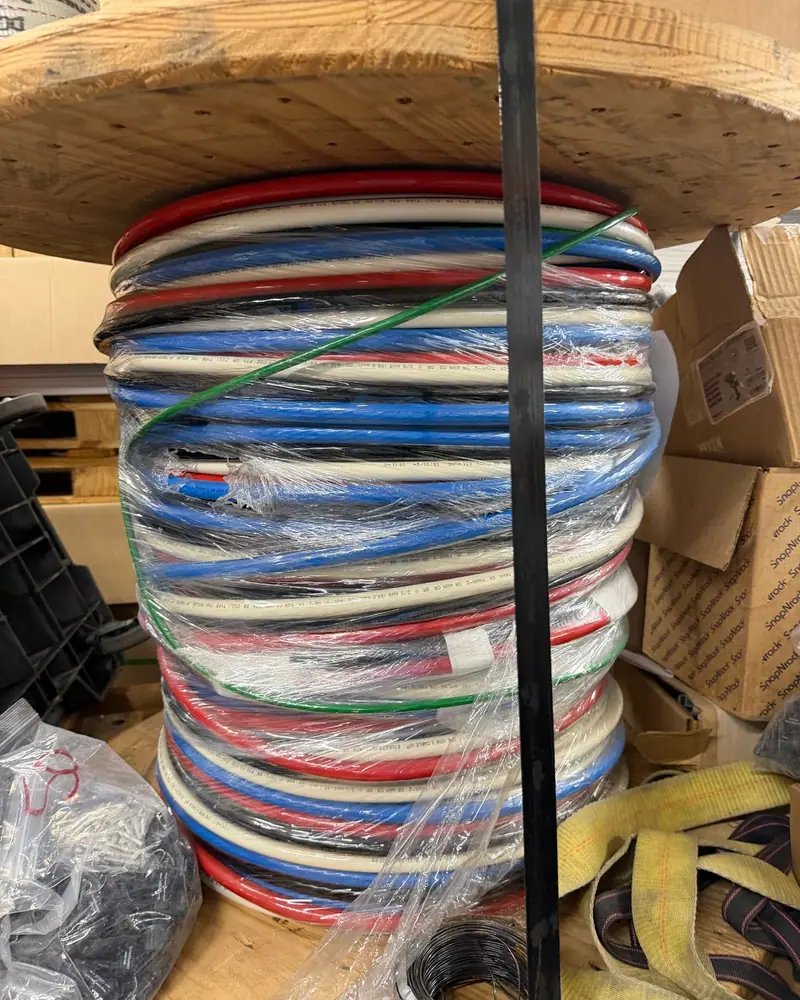
What you can sell on a partial reel or in a coil
We buy new and unused wire left after installations, cancelled orders and inventory changes, along with used cable that remains reusable. A reel does not have to be full, and wire does not have to remain on its original spool. Identification, condition and continuous length matter more than packaging alone.
Examples include THHN/THWN-2 building wire, XHHW-2 conductors, control cable, portable cord and larger power cable. Keep different constructions separate: a coil of single-conductor wire is not interchangeable with a multiconductor cable of the same outside diameter. Our wire and cable buying guide helps you identify the material before submitting it.
If you want to sell short lengths of wire, show each useful piece rather than describing everything as one pile. Include loose coils, boxed leftovers and cable with existing lugs in your photos so we can assess the lot as reusable product.
How we evaluate an offer when you sell partial wire reels
We evaluate partial reels as usable wire, not simply as copper or aluminum weight. The offer depends on the conductor size and material, insulation type, voltage rating, remaining footage and condition. Clear markings and credible length information make the material easier to evaluate.
Continuous length makes a difference. One uninterrupted run can suit an application that several shorter pieces cannot, even when their combined footage matches. Mixed colors, sizes or constructions also need separate descriptions because each has a different potential use.
Reusable wire is usually worth more sold as product than sold as scrap by weight because the buyer is paying for usable wire, not just metal. That does not make every leftover piece resale material. The surplus wire value versus scrap guide explains that distinction.
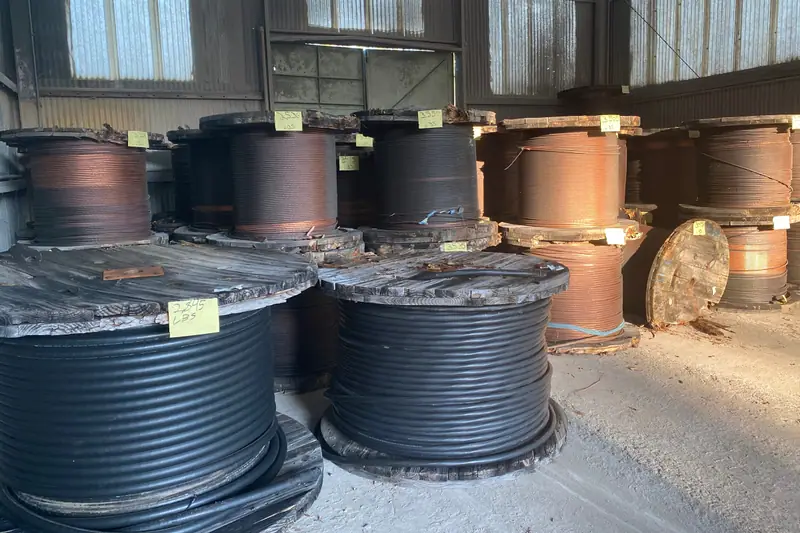
Minimum useful lengths depend on wire size and application
There is no single useful-length cutoff that applies to every wire size. A short, large flexible cable with sound insulation and intact lugs may have a practical reuse application, while small building-wire remnants need enough uninterrupted footage for a suitable installation. We review the actual pieces rather than promising acceptance from gauge alone.
For 14, 12 and 10 AWG building wire, distinguish longer continuous coils from small installation offcuts. For 8 through 1 AWG and 1/0 through 4/0 conductors, list the length of each piece and identify copper or aluminum. For 250 kcmil and larger cable, include jacket markings, end condition and any attached terminations.
Multiconductor cable needs its conductor count as well as gauge and length. Control, instrumentation and power cables can look similar in a loose coil but have different ratings and uses. Send your actual lengths for review; our wire size guide can help you organize the size information.
Have reel tags or a footage list? Send photos and we will review the lot.
Get an offerMeasure remaining footage without hiding uncertainty
Start with any readable footage marks on the jacket and the reel tag. A factory tag may identify the original reel length, but it does not prove how much remains after cuts. Photograph both the tag and the wire markings, and state whether your remaining footage is measured or estimated.
A tape measure can document reel dimensions for an estimate, but it does not directly establish the length wound underneath the outer layer. Avoid unwinding heavy cable just to obtain a number if you cannot handle it safely. Our guide to measuring wire left on a reel explains ways to document remaining footage.
For separate cut lengths, record each continuous piece individually. Three separate coils should not be described as one continuous run. If the length is unknown, say so and send clear whole-coil photos rather than treating a guess as a confirmed measurement.
Sort mixed wire lots so each piece can be assessed
Group material by wire type, conductor size, conductor material and color where practical. Keep the original tags with their reels, and add a separate label for your estimated remaining footage. Do not cover the jacket printing with tape or wrap.
Keep damaged or unidentified pieces separate from clearly marked reusable stock. Show flattened sections, cuts, exposed conductors, corrosion or weather damage instead of leaving those areas outside the photo. If wire is not reusable, we will say so honestly; it may belong with a scrap recycler instead.
- List each reel or coil with its wire type, gauge, conductor count and individual length.
- Note whether the material is unused, previously installed or re-reeled.
- Photograph reel tags, jacket legends, cut ends and the entire lot.
- Identify existing lugs, splices and visible damage so the offer can reflect the actual condition.
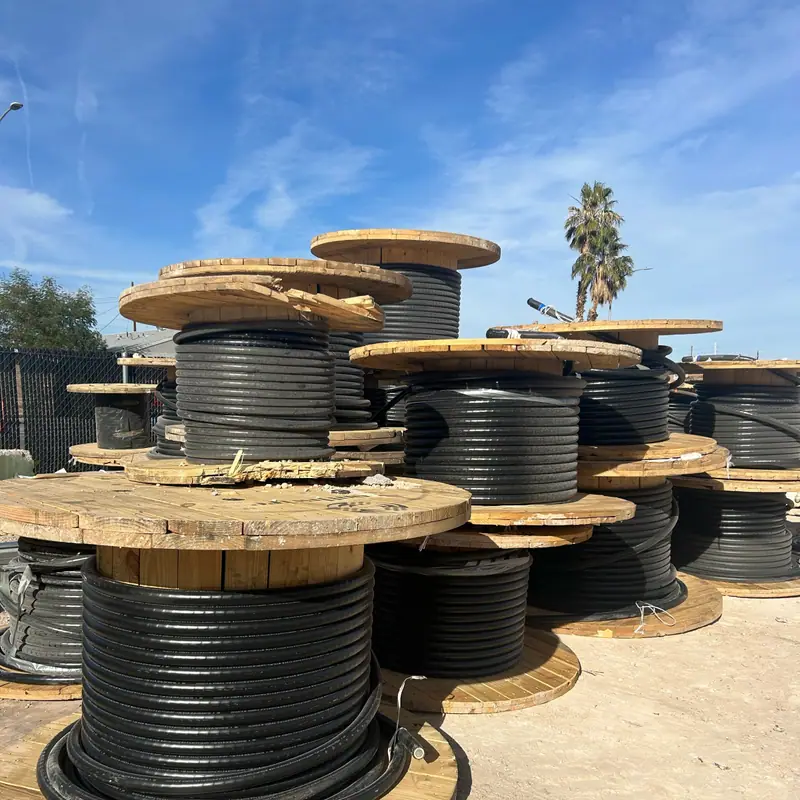
Send partial-reel photos and ownership paperwork for review
Send your photos and list through the offer request form, by email to industrial832@gmail.com, or call 951-403-5738 to discuss the material. Include the pickup location and explain how the reels and coils are currently stored. A clear inventory is more useful than a total weight without wire identification.
We buy reusable surplus product from businesses and verify the seller and proof of ownership, such as an invoice, purchase order, closeout paperwork or company letter. See the Texas wire seller paperwork guide for documentation details.
We review the material and make a written offer before pickup. Payment method and timing are confirmed in writing before pickup, so those terms are established before the material moves.
Arrange Texas pickup or an appointment in Houston
We arrange pickup anywhere in Texas for material agreed upon in the written terms. Tell us whether the lot consists of loose coils, boxed wire or reels, and describe access to the storage area. Keep the reviewed material identifiable so it can be checked against your list.
You can also drop off at Texas Wire Buyers, 6402 McGrew St, Houston, TX 77087, in southeast Houston near I-45 and Loop 610. Call 951-403-5738 first to arrange an appointment rather than arriving with an unreviewed load. At pickup or receipt, we check the count against the written terms.