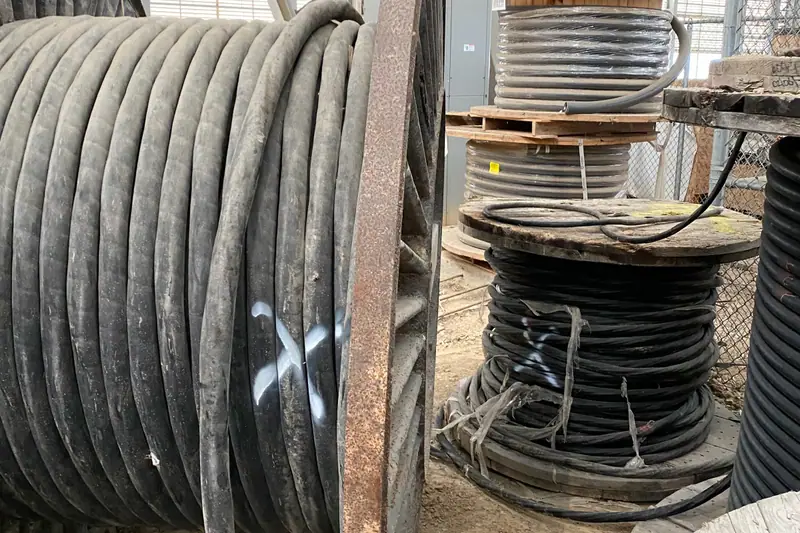
Refinery surplus cable after turnarounds and capital projects
A completed turnaround can leave several kinds of cable in the laydown yard: untouched spare reels, installation remnants, cancelled-order material and cable reserved for work that changed scope. We buy reusable surplus wire and cable for resale and reuse, rather than buying it as scrap by weight.
For plants and project teams along the Houston Ship Channel, in the Golden Triangle and across the Coastal Bend, the first step is separating identifiable product from damaged or unknown material. Keep reel tags, jacket markings and footage records with each lot so we can review what you actually have.
You can send petrochemical plant surplus wire and LNG project surplus cable for review without combining unlike material into one description. Use our offer request form, call 951-403-5738 or email industrial832@gmail.com with photos and a list or footage estimate.
MC-HL and Teck reels from industrial electrical work
For armored cable, photograph the complete reel tag and enough jacket print to show the cable designation. Include conductor size, conductor count, voltage rating, manufacturer and estimated remaining length when available. A black jacket alone does not identify the construction or rating.
We review full reels, partial reels and cut lengths of reusable armored cable. For used material, show cut ends, exposed armor and any crushed sections, jacket splits or corrosion so the condition is clear before pickup.
Keep MC-HL and Teck entries separate on your inventory list rather than grouping everything as armored wire. Our MC-HL and Teck cable buying page explains the identification details to include with those reels.
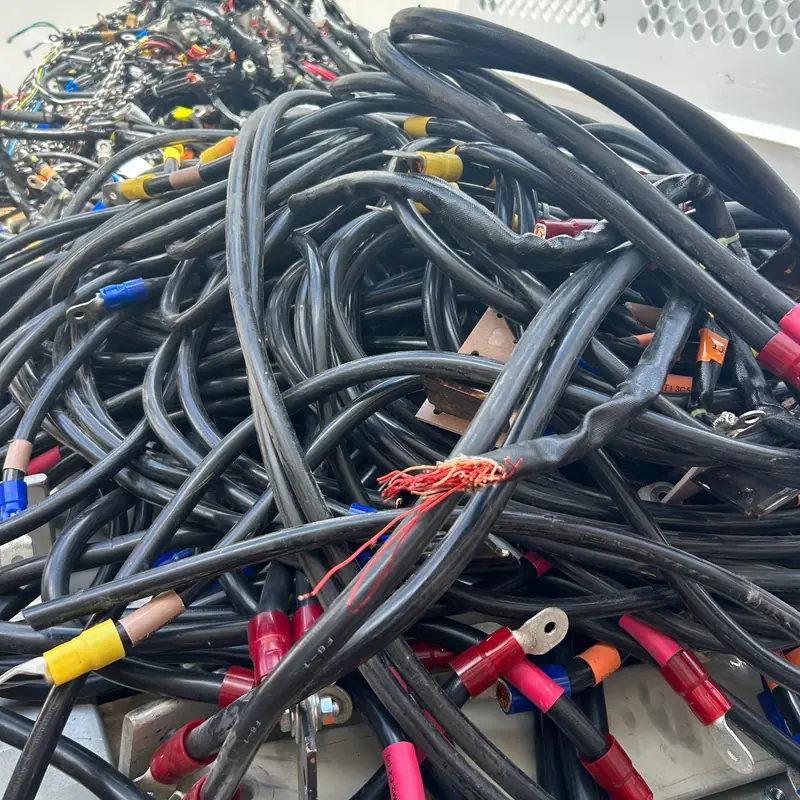
Instrumentation, control and tray cable left after commissioning
Instrumentation lots need more detail than conductor size alone. Record the number of pairs or triads, shielding arrangement, conductor gauge and jacket designation where readable. A close photo of the cut end can help distinguish individual pair shields from an overall shield.
Our instrumentation cable page covers these identification details. For control cable, list conductor count and size, voltage rating and footage for each reel or cut length rather than reporting only the combined footage of the lot.
For TC and TC-ER tray cable, show the actual jacket legend and any remaining factory labels. Keep different ratings and constructions on separate inventory lines, even when they share the same conductor size. This makes the offer review more specific and the pickup count easier to reconcile.
Have reel tags or a footage list? Send photos and we will review the lot.
Get an offerSeparate unused closeout stock from decommissioned cable
Unused project leftovers and used cable should be identified separately. We also review used cable that remains reusable, including decommissioned power cable and re-reeled cable, but condition and identification matter. Tell us how the material was removed and describe known damage rather than assuming every length is suitable.
Leave usable lengths intact while we review them. Cutting cable into short pieces or stripping it removes the product form that a reuse buyer is evaluating. Reusable wire is usually worth more sold as product than sold as scrap by weight because the buyer is paying for usable wire, not just its metal.
If the material is not reusable, we will say so honestly; it may belong with a scrap recycler instead. Keep questionable sections separate so their condition does not obscure the rest of the refinery surplus cable inventory.
Build a refinery cable inventory we can review
A useful submission connects each photo to a specific reel or bundle. Use an existing reel number or assign a simple inventory ID, then carry that ID through the photos and list. Mark footage as estimated when it has not been confirmed.
Photograph the whole lot as well as individual labels and cut ends. If a partial reel has no reliable footage record, our guide to measuring wire left on a reel can help you prepare an estimate without presenting it as a verified length.
- List cable type, conductor size and count, rating, footage and new or used condition for each entry.
- Show readable reel tags, jacket print, cut ends and the overall condition of each reel or bundle.
- Identify mixed lots, missing labels, damaged flanges and any known cable damage.
- Include the pickup address and describe site access, loading arrangements and available release paperwork.
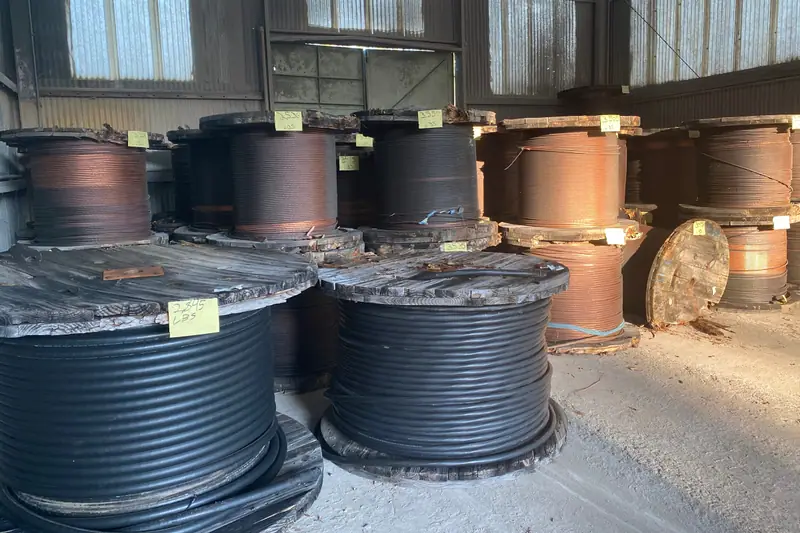
Protect cable in Gulf Coast laydown yards
Turnaround leftovers may remain outside while closeout decisions are made. Keep labels readable, protect exposed cable ends and avoid mixing loose lengths with material scheduled for disposal. Photograph existing damage before moving reels so the offer review reflects their condition.
Our Texas wire reel storage guide covers practical storage considerations. Before pickup, tell us about restricted access, site appointment requirements and the condition of the reels. We arrange pickup anywhere in Texas; sellers can also drop off by appointment at our southeast Houston location near I-45 and Loop 610.
Written terms and release details for plant surplus
We verify the seller and proof of ownership, such as an invoice, purchase order, closeout paperwork or company letter, and keep a written purchase record. See our Texas seller paperwork guide for documentation details.
After reviewing your photos and inventory, we make a written offer before pickup. Payment method and timing are confirmed in writing before pickup, and we check the received count against the written terms. Our wire buying process explains the steps from submission through pickup or drop-off.
For a Houston drop-off, call first at 951-403-5738 to arrange an appointment at 6402 McGrew St, Houston, TX 77087. Start with the inventory and photos so we can review the material before you transport it.