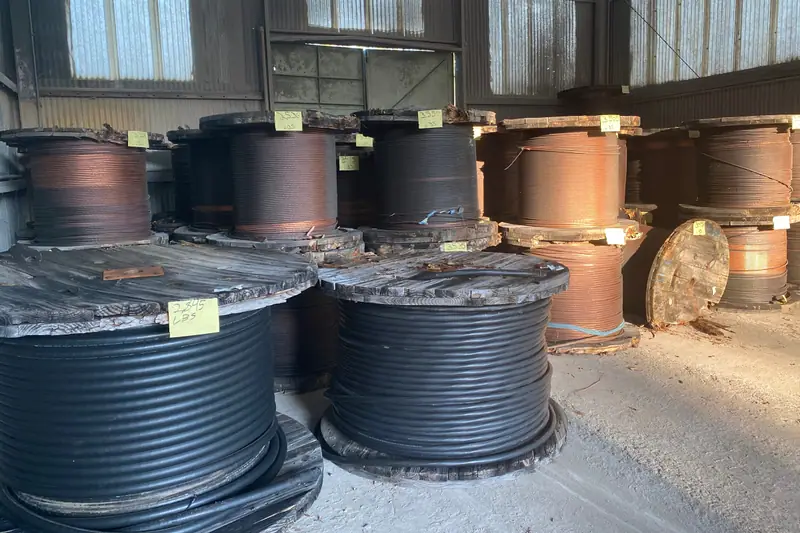
Sell Tray Cable Left After Plant Work or Project Closeout
Tray cable left after an installation, equipment change or cancelled order can still have a use beyond your storeroom. We buy new and unused reels, distributor and plant overstock, project leftovers and used cable that remains reusable. Keep the cable identified and intact while we review it.
Multi-conductor tray cable commonly carries power or control circuits in plants and process facilities. A reel containing several insulated conductors under one outer jacket needs a different description from individual building wires: conductor count, conductor size and the complete jacket legend all matter.
If your lot includes several constructions, separate them on your inventory list rather than combining everything as industrial cable. Our wire and cable buying guide can help you sort other material alongside the TC reels.
TC and TC-ER Markings Help Identify Your Surplus
Photograph the printed cable legend wherever it is readable. Look for the manufacturer, catalog number, conductor count, AWG or kcmil size, voltage rating, temperature markings and TC or TC-ER designation. Copy the markings exactly rather than identifying a cable from appearance alone.
TC-ER identifies tray cable with an exposed-run rating; the permitted installation still depends on the cable markings and applicable installation requirements. Do not describe ordinary TC as TC-ER unless that designation appears on the product. If you have surplus TC-ER cable, show that part of the legend clearly.
For PVC/nylon constructions, include any insulation details shown on the tag or product label. A black outer jacket alone does not establish the insulation system or rating. Our reel tag reading guide explains which label details to capture.
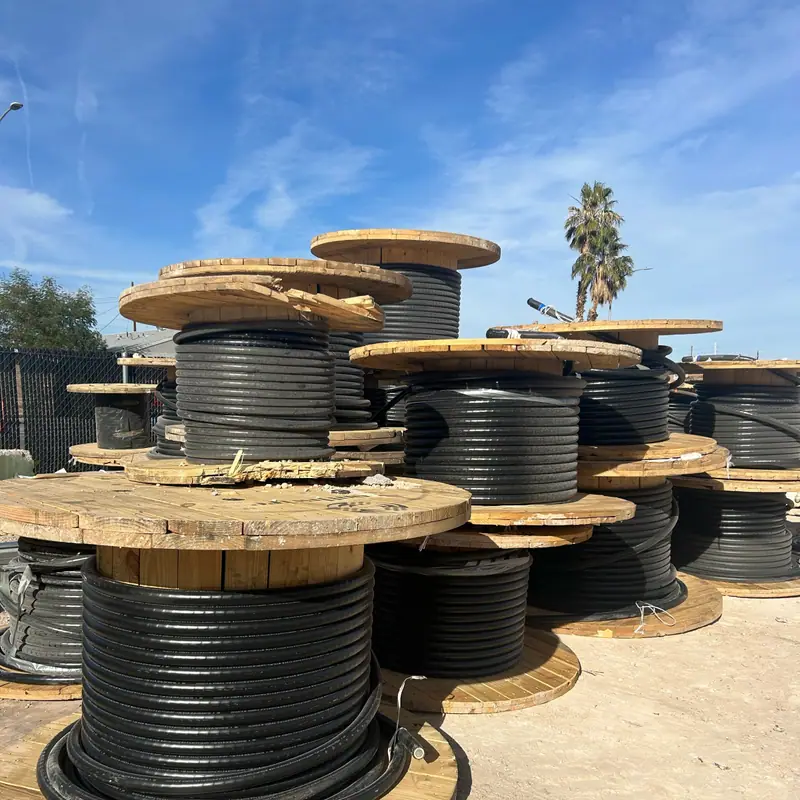
Power, Control and Mixed Tray Cable Lots
Tell us what each reel contains, even when the cables came from the same project. For example, a tag might describe a three-conductor 6 AWG power cable or a twelve-conductor 14 AWG control cable. These are different products, and the remaining usable length matters for each one.
Include whether a grounding conductor is present and whether the cable has shielding, if those details are known. Photograph the cut end so we can compare the visible construction with the tag. Do not remove more jacket just to create a photo if an existing exposed end already shows the conductors.
Some control cable also carries a tray rating, so descriptions can overlap. You can include those reels in the same inquiry; our control cable buying page covers the information useful for multi-conductor control lots.
Have reel tags or a footage list? Send photos and we will review the lot.
Get an offerPartial Tray Cable Reels and Reusable Removed Cable
A partial reel does not need to be treated as scrap simply because the original footage is gone. List the remaining length as measured or estimated, and say which it is. If several separate cuts share one reel, identify the individual lengths instead of presenting the total as one continuous run.
We also review used tray cable that is still in reusable condition, including re-reeled material. Disclose why it was removed and show any jacket damage, crushed areas, exposed conductors, tight kinks or other condition concerns. Age alone does not tell us whether a cable can be reused.
Keep separate lengths bundled and labeled so their identities do not get lost during handling. The guide to partial reels and cut lengths explains how to describe material that no longer matches its original reel quantity.
What Tray Cable Buyers Need for a Written Offer
Send a whole-lot photo first, followed by close-ups that connect each reel or coil to its identification. A clear inventory lets us distinguish matching reels from mixed constructions and understand how much usable cable is available. You can send information by phone, the online form or email.
Use the following checklist for each line item. If a detail is unknown, mark it unknown rather than guessing; our cable photo guide shows how to organize useful pictures.
- Reel or coil identifier, manufacturer and catalog number when available.
- Conductor count, conductor size, voltage rating and TC or TC-ER markings.
- Remaining footage, including whether it is measured, estimated or divided into separate cuts.
- Photos of the reel tag, jacket legend, cut end and overall condition.
- Pickup location and whether the material is on reels, in boxes or bundled as coils.
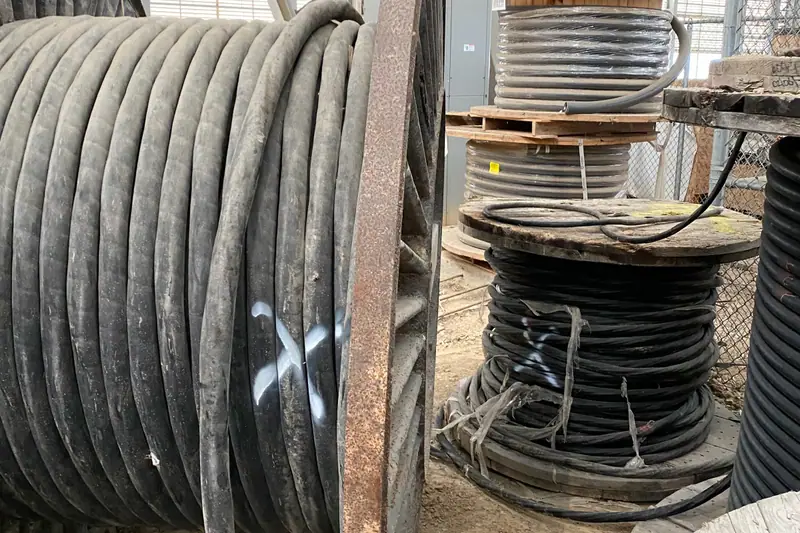
Tray Cable Value Comes From Its Remaining Use
Reusable wire is usually worth more sold as product than sold as scrap by weight, because the buyer is paying for usable cable rather than just metal. For tray cable, identification, construction, remaining length and condition help determine whether it has a practical resale use.
A readable label supports an accurate description, but it does not replace checking the cable itself. Likewise, a large reel does not establish how much cable remains. Keep footage estimates separate from confirmed measurements and disclose storage or handling damage before pickup.
Our guide to what affects surplus cable value explains these considerations in more detail. If the material is not reusable, we will say so honestly; it may belong with a scrap recycler instead.
Arrange Texas Pickup for Your Tray Cable Lot
We arrange pickup anywhere in Texas. You can also drop off at Texas Wire Buyers, 6402 McGrew St, Houston, TX 77087, in southeast Houston near I-45 and Loop 610, by appointment. Call 951-403-5738 before bringing cable to the location.
We review your information and make a written offer before pickup; payment method and timing are also confirmed in writing before pickup. We verify the seller and proof of ownership, such as an invoice, purchase order, closeout paperwork or company letter, and keep a written purchase record; see our Texas seller paperwork guide.
At pickup or drop-off, we check the count against the written terms. To begin, request a tray cable offer with your photos and list, call 951-403-5738 or email industrial832@gmail.com.