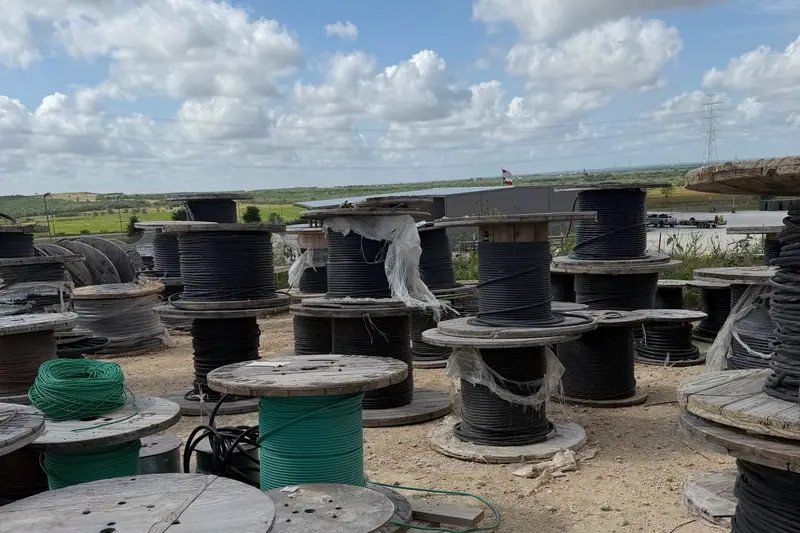
Solar Project Surplus Wire After Construction or Scope Changes
Cable inventories change as utility-scale solar, wind and battery energy storage projects move through procurement, installation and closeout across ERCOT. Revised routes, cancelled orders and remaining reel footage can leave usable product after the installation is complete. We buy that reusable surplus for resale and reuse, not as scrap.
You can submit an entire remaining cable inventory or identify separate lots by cable type. Include unused full reels, partial reels, boxed coils and cut lengths, along with any used cable that remains reusable. Keep materials separated so we can review each construction, rating and length rather than treating the lot as undifferentiated metal.
PV Wire From Array Rows and Inverter Runs
PV wire is insulated conductor made for photovoltaic applications, with its designation and ratings printed on the jacket. When you want to sell surplus solar cable, photograph that print rather than identifying the wire by red or black insulation alone. Conductor size, copper or aluminum construction, voltage rating and available length help identify the product.
For boxed coils, show the packaging labels and whether the packaging is intact. For reels, photograph both the tag and the remaining wire. Our solar PV wire buying page explains the details to include when submitting unused PV cable.
- List each gauge and color separately, with the footage available for each.
- Distinguish factory lengths from estimated remaining footage and separate cut pieces.
- Show exposed ends, damaged packaging or jacket concerns rather than leaving them out.
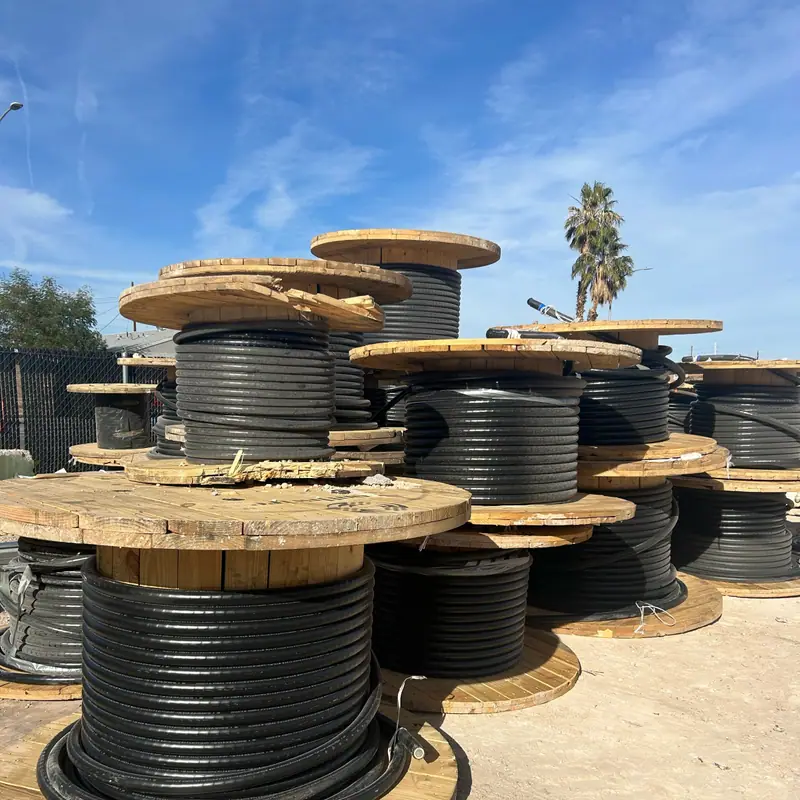
Wind Collection Cable, Aluminum Conductors and 34.5kV Reels
Wind farm surplus cable may include aluminum collection conductors, medium-voltage power cable and grounding material left at a laydown area. Send the full reel tag for 34.5kV cable, including conductor size, insulation information, shield construction and manufacturer markings where available. A voltage description alone does not identify the complete cable.
Keep different constructions on separate inventory lines, even when the conductor size matches. Our medium-voltage cable page covers power-cable identification, while our aluminum wire and cable page helps you describe aluminum inventory. Tell us whether reels are unopened, partly used or re-reeled and identify any uncertain lengths.
Have reel tags or a footage list? Send photos and we will review the lot.
Get an offerBattery Storage Cable, Grounding Copper and Project Fiber
BESS closeouts can leave power conductors, flexible battery cables with lugs, grounding copper and communications fiber. We review new surplus and used cable that is still in reusable condition, including decommissioned battery cables and re-reeled material. Show termination condition and the full length of each assembly when practical.
For grounding copper, identify bare or insulated construction and conductor size. For fiber, include the reel label, fiber count, cable construction and length information; do not group it with power cable simply because it shares a storage area. See our fiber optic cable buying details for information to include with those reels.
Build a Useful Solar, Wind or BESS Cable Inventory
Start with a simple list that matches your photos to individual reels, coils or bundles. Photograph the whole lot, reel tags, jacket print legends and cut ends. If a reel label reflects the original quantity rather than the remaining footage, make that distinction clear instead of repeating the tag quantity as current inventory.
Identify where the material is stored and describe access for removal, including reel dimensions or weights if known. For partial reels and cut lengths, report each usable continuous length separately. Several short pieces are not the same product as one continuous run, even when their combined footage is equal.
- Record cable type, conductor size, material, voltage rating and quantity.
- Note storage exposure, visible jacket damage, missing tags and uncertain identification.
- Separate unused surplus from removed cable, and identify any lugs or other terminations.
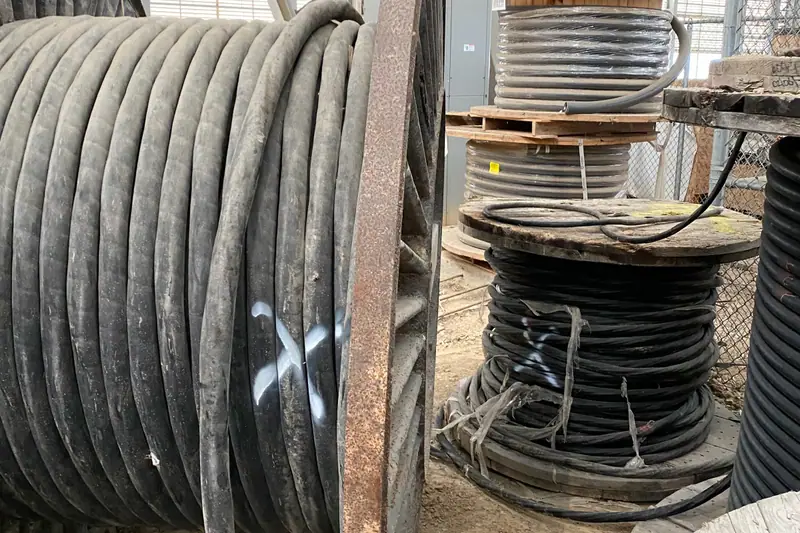
What Makes Renewable Project Cable Reusable?
Useful continuous lengths, identifiable specifications and sound condition matter when reviewing solar project surplus wire. Intact labels and readable jacket markings help establish what the cable is, while photos show how it has been stored and handled. Disclose crushed reels, damaged insulation or exposed cable ends so those issues can be considered.
Reusable wire is usually worth more sold as product than sold as scrap by weight because the buyer is paying for usable wire, not just metal. That does not make every leftover cable reusable. Our guide to surplus wire value versus scrap price explains the distinction; if your wire is not reusable, we say so honestly and it may belong with a scrap recycler instead.
Texas Pickup and Written Terms for Project Cable
Send your photos and inventory through the offer request form, call 951-403-5738 or email industrial832@gmail.com. We review the material and make a written offer before pickup. Payment method and timing are confirmed in writing before pickup, so you can review those terms before releasing the cable.
We verify the seller and proof of ownership, such as an invoice, purchase order, closeout paperwork or company letter, and keep a written purchase record. Review the Texas wire seller paperwork guide when preparing your documents.
We arrange pickup anywhere in Texas, including project sites and storage yards. You can also drop off by appointment at 6402 McGrew St, Houston, TX 77087, in southeast Houston near I-45 and Loop 610; call first. At pickup or drop-off, we check the count against the written terms.