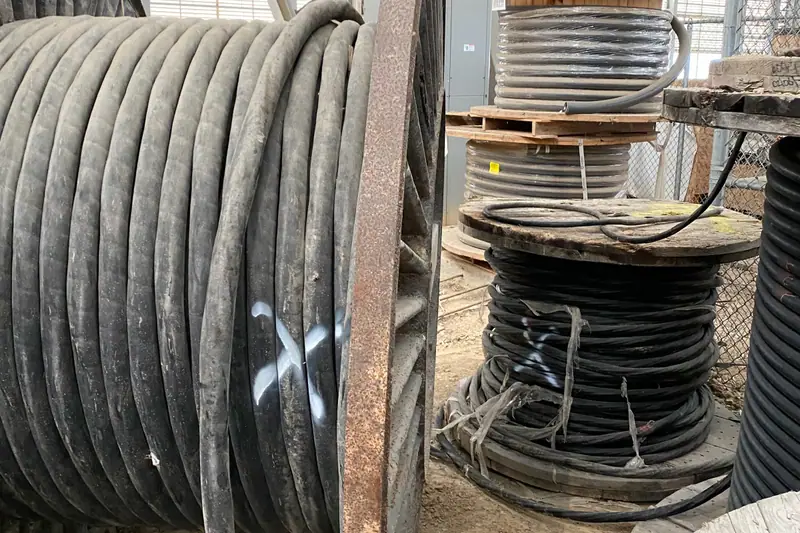
Sell Medium Voltage Cable by Specification, Not Just Weight
Medium-voltage cable is built for a particular electrical application, so conductor size alone does not describe what you have. Voltage class, insulation material, insulation level and shield construction all help establish whether a surplus reel can be matched to another use.
We review copper and aluminum shielded power cable from cancelled orders, distributor overstock, plant inventory and project leftovers. New, unused material with readable identification is straightforward to describe, but used cable that remains reusable can also be submitted for review.
Reusable wire is usually worth more sold as product than sold as scrap by weight because the buyer is paying for usable cable, not just metal. Our guide to surplus wire value versus scrap price explains why preserving identification and usable lengths matters.
5kV Through 35kV: Identify the Complete Cable Construction
If you want to sell 5kv cable, start with the jacket legend and reel tag rather than a visual guess. Do the same for surplus 15kv cable, 25kV cable and 35kV cable: record the marked voltage class, conductor material and size, manufacturer, and available length.
Include EPR or XLPE insulation, the marked 100% or 133% insulation level, and copper tape shield or concentric-neutral construction. These details are not interchangeable descriptions; send the actual markings rather than assuming that cables with similar outside diameters are equivalent.
- Identify single-conductor or multiconductor construction and list each distinct cable separately.
- Record conductor sizes in AWG or kcmil exactly as printed.
- Photograph any tag information about shielding, jacket material and manufacturing date.
- For concentric-neutral cable, include the neutral construction shown on the tag or specification sheet.
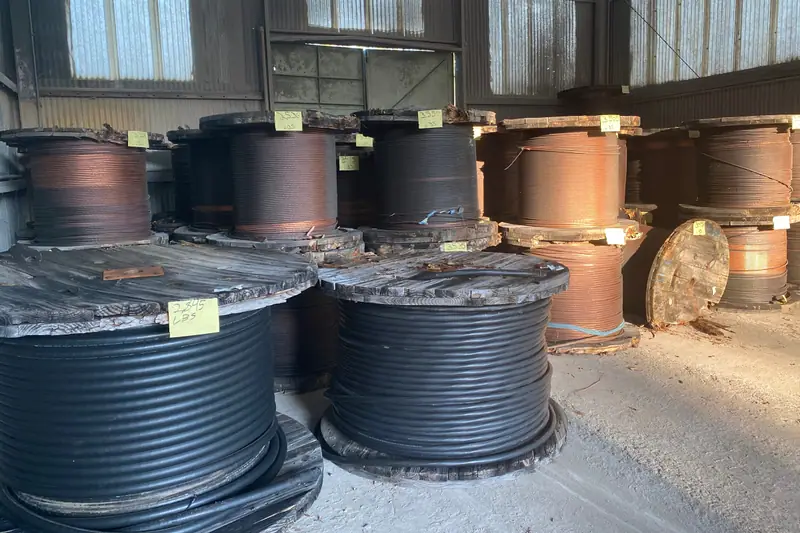
Full Reels, Partial Reels and Medium-Voltage Cut Lengths
A full factory reel, a partially used reel and several separate cut lengths should not be listed as one combined footage total. Tell us how many individual lengths you have and whether each length is continuous, spliced or terminated.
For partial reels, distinguish the original tag footage from your estimate of what remains. If the remaining footage is uncertain, label it as an estimate; our guide to measuring wire left on a reel can help organize the information without presenting an estimate as a measured length.
Keep reel identifiers attached and group matching specifications together in your inventory list. For loose lengths, record each piece separately and photograph its markings and ends; see our information on partial reels and cut lengths for describing these lots.
Have reel tags or a footage list? Send photos and we will review the lot.
Get an offerPhotos MV Cable Buyers Need to Review Your Lot
As mv cable buyers focused on reuse, we need more than a distant photograph of a reel. Send clear images that connect the cable identification to its current condition and the quantity you are offering.
Photograph existing exposed cut ends without cutting cable solely for a photo. Include visible damage, open ends, missing caps or damaged reel flanges rather than leaving those details out; our wire photography guide explains how to assemble a useful photo set.
- Whole lot: show every reel or coil and its identifying number.
- Reel tag: make the specification and original footage readable.
- Jacket legend: capture enough consecutive print to identify the cable.
- Existing cut ends: show the conductor, insulation and shield where visible.
- Condition details: show abrasions, crushed areas, exposed layers or storage damage.
Used Shielded Power Cable Requires a Condition Review
Decommissioned cable is not automatically scrap, but its previous service and removal condition matter. Tell us where it was used, why it was removed, whether it has been re-reeled, and whether pulling, bending or removal caused visible damage.
Provide any available specifications, service information or test records with your submission. Photos alone do not establish electrical suitability, and an intact outer jacket does not describe every layer beneath it.
We review used electrical wire and cable only for potential resale and reuse. If the material is not reusable, we say so honestly; it may belong with a scrap recycler instead.
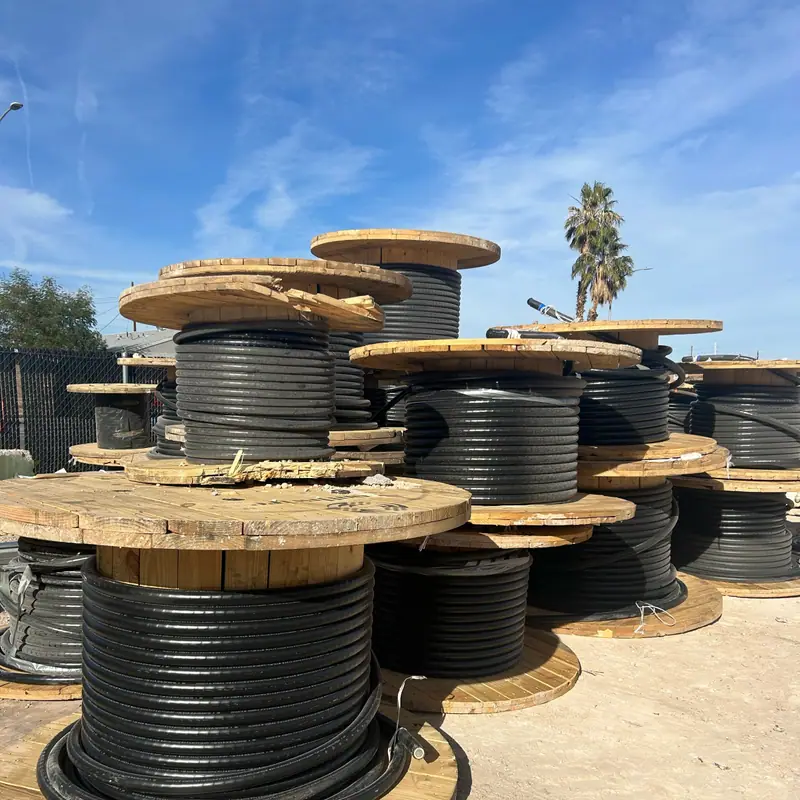
Surplus Cable from Substations, Plants and Energy Projects
Medium-voltage leftovers can come from substation work, industrial plant upgrades, data center power distribution and wind or solar collection systems. A cancelled feeder run or revised route can leave identifiable cable on reels even when the original project no longer needs it.
Separate medium-voltage collection cable from lower-voltage PV wire, control cable and other project material. For mixed renewable-energy inventories, our information for solar, wind and battery storage projects can help you organize the broader lot.
For plant or distributor overstock, include the inventory list alongside current photos. Note differences between otherwise similar reels, especially voltage class, insulation level, conductor size and shield construction, so each item can be reviewed accurately.
Get a Written Offer and Arrange Texas Pickup
Send your list, footage estimates and photos through our offer request form, call 951-403-5738, or email industrial832@gmail.com. We review the material and make a written offer before pickup, with payment method and timing confirmed in writing before pickup.
We verify the seller and proof of ownership, such as an invoice, purchase order, closeout paperwork or company letter, and keep a written purchase record. Review our Texas wire seller paperwork guide for documentation details.
We arrange pickup anywhere in Texas and check the received count against the written terms. You can also drop off by appointment at 6402 McGrew St, Houston, TX 77087, in southeast Houston near I-45 and Loop 610; call first and describe reel dimensions, access and available loading arrangements.