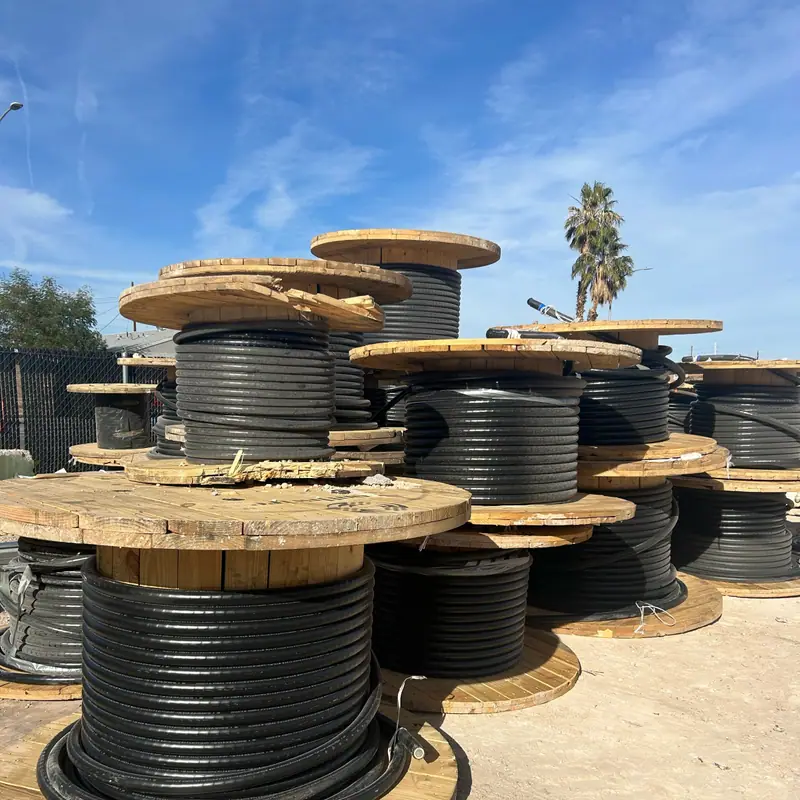
Sell SOOW cord as usable product, not just copper
Portable cord left after an equipment installation or temporary-power job may still have value as working inventory. We buy reusable surplus from businesses, including cancelled-order material, distributor overstock, plant inventory and project leftovers. An unused partial reel can be worth reviewing even when the original job is finished.
Reusable wire is usually worth more sold as product than sold as scrap by weight because the buyer is paying for usable cord, not just its metal content. Type, gauge, conductor count, continuous length and condition all matter. Our guide to surplus wire value versus scrap price explains that distinction.
SOOW, SJOOW and SEOOW: identify the exact cord
Send the actual jacket legend rather than describing every black flexible cable as SOOW. SOOW and SEOOW are generally marked for 600 volts, while SJOOW is generally marked for 300 volts. The printed type and rating help us distinguish portable cord from other power and control cables.
Include conductor size and count exactly as marked, such as 12/3, 10/4 or 6/4. Photograph any voltage, temperature and manufacturer markings you can read. If the tag and jacket do not match, send both rather than choosing one description.
As portable cord buyers, we review each lot by its identifiable specifications and usable condition. If your surplus includes other cable types, the wire and cable we buy page can help you separate them before sending your inventory.
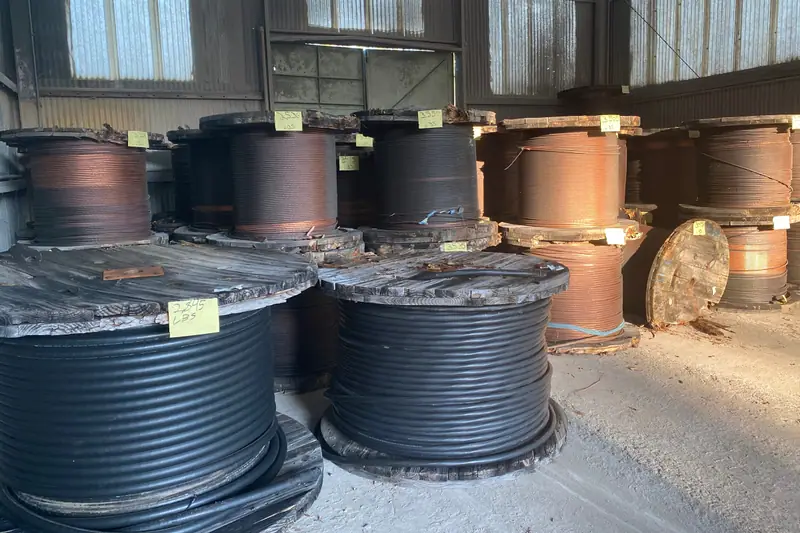
Full reels, coils and continuous portable-cord lengths
We buy new and unused full reels, partial reels, boxed coils and cut lengths of reusable portable cord. Keep different gauges and conductor counts separated. Several short pieces are not the same inventory as one continuous length, even when their combined footage is identical.
For each reel or coil, list the estimated footage and note whether it is one uninterrupted piece. Identify factory splices, field repairs or separate lengths wound onto the same reel if known. Our partial reels and cut lengths guide explains how to describe material without an original full-reel quantity.
- Keep reel labels and carton labels attached so the cord can be matched to its specifications.
- List loose coils separately instead of combining unlike cord into one footage total.
- Describe attached plugs, connectors or equipment ends and include clear photographs.
Have reel tags or a footage list? Send photos and we will review the lot.
Get an offerUsed portable cord from temporary power and equipment
You can offer used portable cord if it is still in reusable condition. Cord removed from equipment or a temporary-power setup needs a clear description of its condition, not just its original rating. Tell us about exposure, storage, repairs and any known damage.
Photograph cuts, crushed areas, cracked jackets, exposed conductors, heat damage or damaged connectors. Do not conceal a problem under tape or present repaired cord as unused. Photos help us review the lot, but they do not establish that damaged cord is safe to put back into service.
If you want to sell power cords with attached ends, show the complete assembly and close-ups of both ends. We review them for reuse rather than assuming every old cord qualifies. See our guidance on selling used electrical wire for other removed cable.
Photos and footage for a portable-cord offer
Start with a photograph of the whole lot, then add readable reel tags, jacket legends and cut ends. Include close-ups of any damage and show how the cord is packaged. A wide photo tells us how many reels or coils there are; close-ups establish what each contains.
A simple list can identify each item by type, gauge, conductor count, estimated length and condition. Mark estimates as estimates rather than presenting them as confirmed measurements. Use our wire photography guide to organize the images.
If footage is missing, do not guess from reel diameter alone. Reel dimensions, winding and cord diameter affect an estimate. Our guide to measuring wire left on a reel can help you prepare a more useful description without confusing weight with usable length.
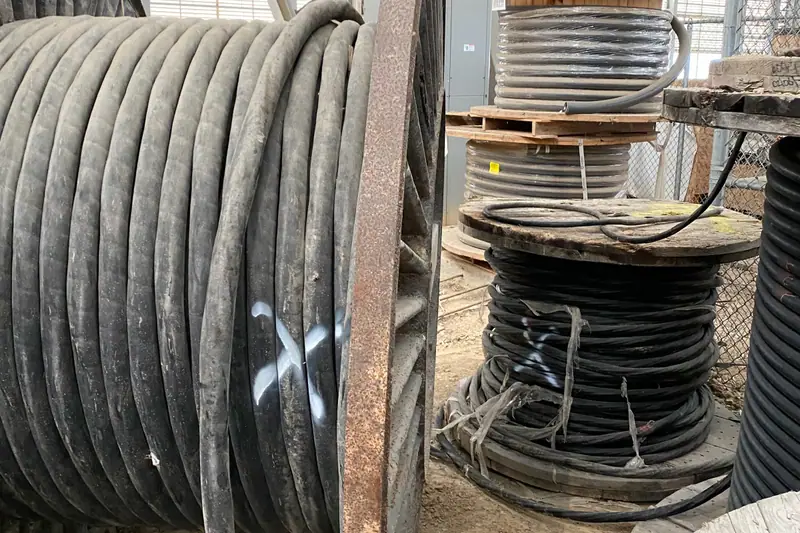
Written offers and Texas portable-cord pickup
Send your photos and inventory through the online form, by email at industrial832@gmail.com, or call 951-403-5738 to discuss the lot. We review the material and make a written offer before pickup. Payment method and timing are also confirmed in writing before pickup.
We arrange pickup anywhere in Texas. Tell us where the cord is stored and whether it is on reels, loose in coils or boxed so pickup can be planned around the actual lot. We check the count against the written terms when receiving the material.
You can also drop off by appointment at 6402 McGrew St, Houston, TX 77087, in southeast Houston near I-45 and Loop 610. Call first rather than arriving with an unreviewed load. To begin, request an offer for your portable cord with the details you have available.
Ownership paperwork for surplus SOOW and SJOOW
We buy reusable surplus product from businesses, verify the seller and proof of ownership such as an invoice, purchase order, closeout paperwork or company letter, and keep a written record of each purchase. Review our Texas wire seller paperwork guide when preparing your lot.
Keep identifiable, reusable cord separate from damaged material before requesting an offer. Leave readable labels in place and connect each inventory entry to its reel or coil. If the wire is not reusable, we say so honestly; it may belong with a scrap recycler instead.